Emerging Leaders in Engineering (ELE)
ELE is the premier leadership program operated by the College of Engineering, comprised of three distinct leadership roles that promote engineering for the public good.
What is ELE?
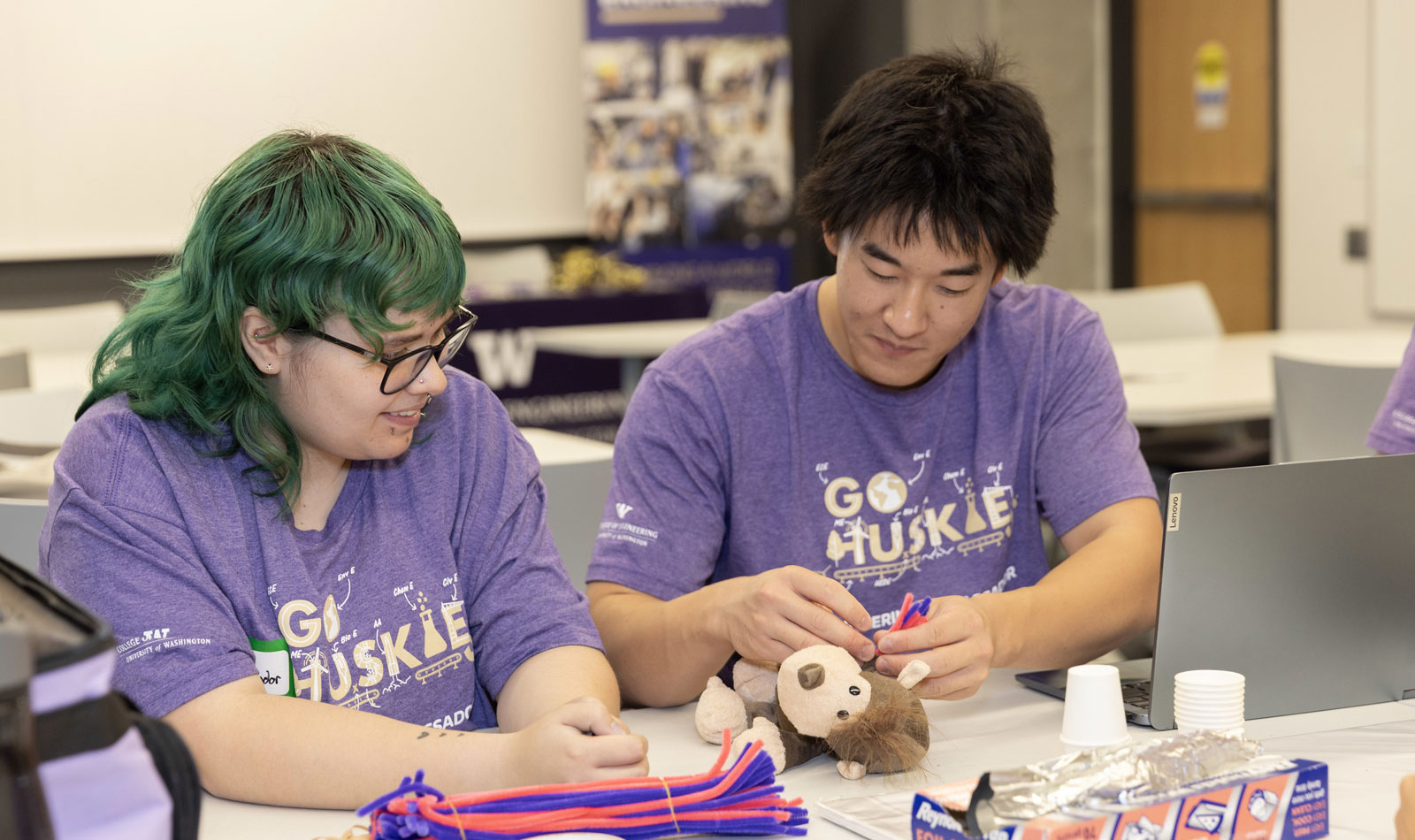
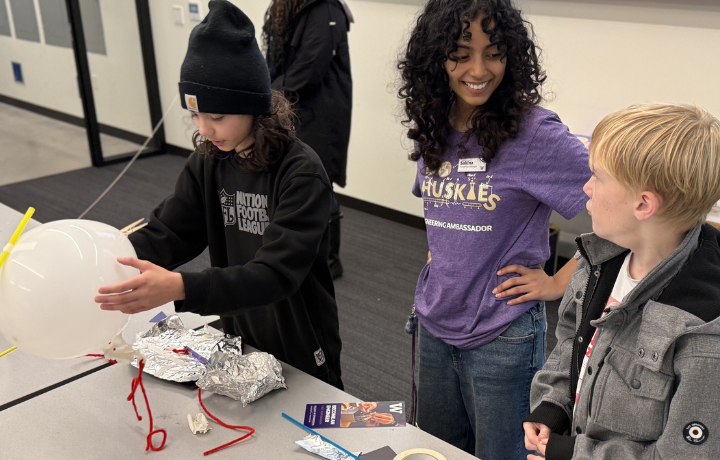
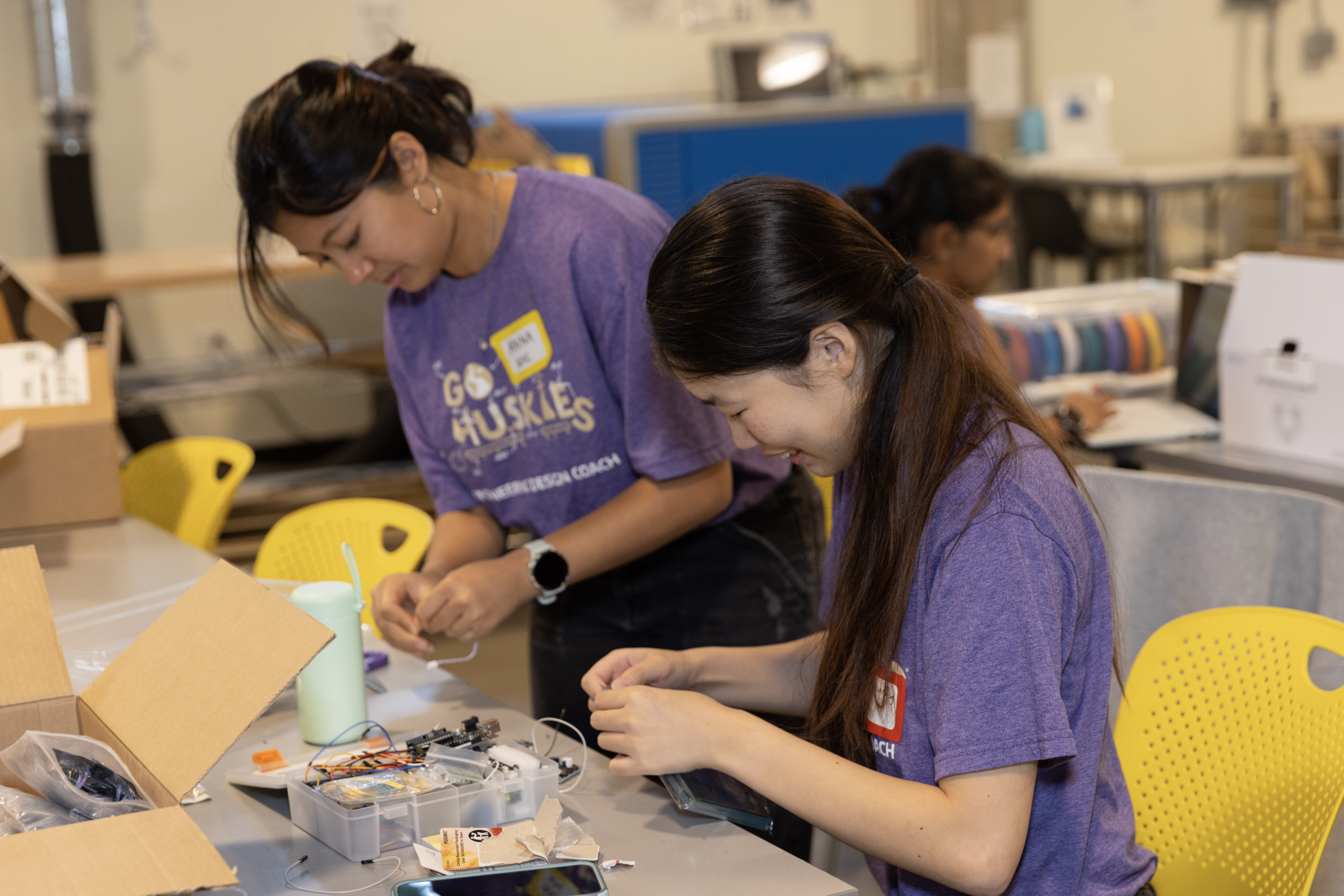
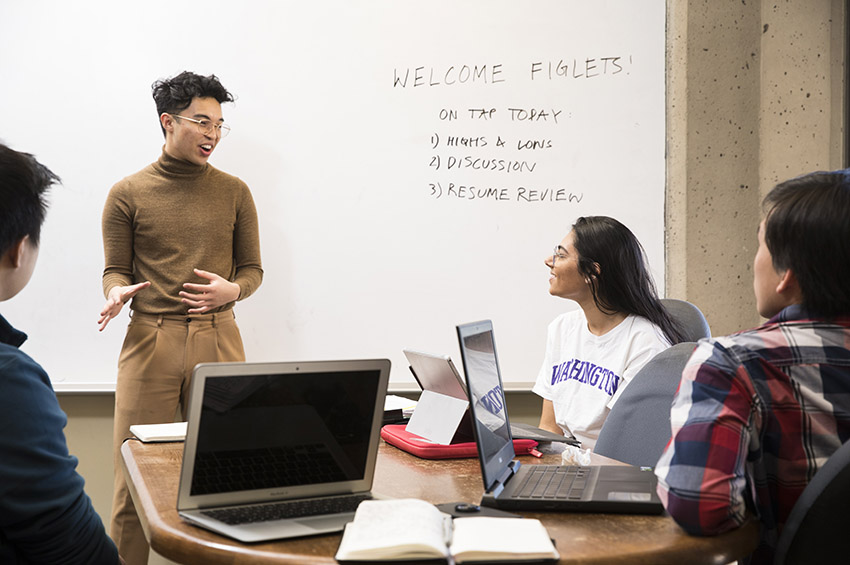
Emerging Leaders in Engineering (ELE) is a community of three student leadership programs—Engineering Ambassadors, Engineering Design Coaches, and Engineering Peer Educators—dedicated to educating and supporting the next generation of outstanding engineers. Through structured training and hands-on experiences, ELEs become more confident student leaders while building a welcoming, inclusive engineering community.
Build career- ready skills
Strengthen your communication, public speaking, mentoring, teamwork, critical thinking, and problem-solving skills.
Earn academic credit
Receive two credits and transcripted leadership experience in the spring quarter. EPEs also receive one additional credit in the autumn quarter.
Explore professional development
Access additional events, resources, and opportunities to grow your professional skills and network.
Receive scholarship funding
Thanks to generous donors, ELE students may receive up to $1,800 in scholarship funding throughout the academic year.
ELE programs
How to apply
There is one application process for Emerging Leaders in Engineering to be considered for any/all of the associated programs: Engineering Ambassadors, Engineering Design Coaches, or Engineering Peer Educators. You are encouraged to rank any/all programs you would be interested in participating in. Ranking multiple positions will not impact your chances of being selected for your first choice. You are also welcome to apply to a single program.
The ELE application will open again on December 1, 2026.
The basic eligibility requirements for participation in all programs:
- Currently enrolled as an undergraduate student in the College of Engineering at UW Seattle with completion of at least one quarter.
- Students in the Paul Allen School (Computer Science or Computer Engineering) are eligible to apply to be an Engineering Design Coach only. The Allen School manages a peer advising program that is similar to the Engineering Peer Educators and an ambassador program that CSE students are encouraged to consider.
- Students in the Sustainable Bioresource Systems Engineering (SBSE) major are not eligible for ELE. Please see the SEFS Ambassador program for a similar opportunity within your major.
- A minimum of a 2.00 cumulative GPA
- Anticipated graduation date of Spring 2028 or later
- Good standing with the Community Standards and Student Conduct Office
- Ability to fulfill all outlined time commitments and responsibilities from Winter 2027 through Spring 2028
December 1: ELE application opens
January 19: ELE application closes
February 5: First day of interviews
February 26: All offers sent
What our students are saying
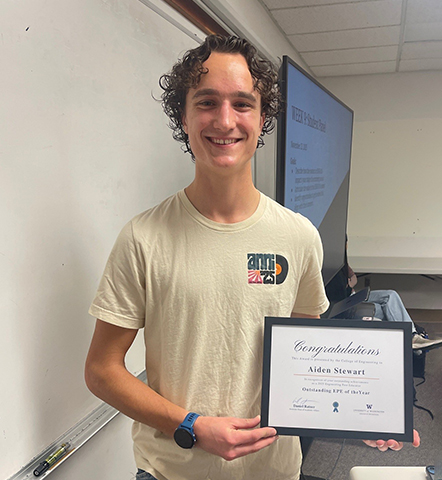
Serving as an Engineering Peer Educator has been one of the most formative and rewarding experiences of my time at the University of Washington. Guiding incoming students through the challenges of their first year strengthened my ability to lead with empathy, clarity, and confidence. Watching my students grow academically and personally has been deeply fulfilling and reinforces the strong sense of community within the College of Engineering.
Beyond the classroom, the Emerging Leaders in Engineering community has surrounded me with driven, thoughtful peers who continually challenge and inspire me. The EPE program has not only shaped me as a leader, but also given me a lasting sense of belonging and purpose within engineering. It has defined my undergraduate experience and continues to push me to grow as a mentor, a teammate, and an engineer."
2025 EPE, winner of the 2025 Outstanding EPE of the Year Award
We are grateful for the support from our organizational partners