
Industry-Sponsored Student Capstone Projects
2024/2025
In the 2024/25 academic year the industry capstone program was supported by 65 sponsors, more than half of which were returning, and 96 real-world projects. Over five hundred fifty students from across the College of Engineering participated. Scroll down to learn more about each project.
Cyberworks Robotics
Autonomous Self Driving Wheelchair
Autonomous Wheelchairs increase freedom and ease of mobility for the most vulnerable peoples in society. Large-scale campus-wide autonomous navigation of a power wheelchair faces numerous corner case confounds ranging from loss of localization due to feature-sparsity to human motion sickness. This student team will work to identify and address corner cases that allow for robust persistent navigation over vast indoor and outdoor regions within the UW campus and fleet integration to the cloud for remote monitoring, user authentication and over-the-air updates. Low hardware cost is essential to mass adoption of such technology. Therefore, this student team will also work to focus on use of inexpensive but cutting edge technologies such as monocular Neural SLAM and Dense Optical FlowML Behavior Cloning as a means to reduce or eliminate reliance on expensive LiDAR based visual SLAM. This student team will work to: - Identify of navigational confounds in a complex large scale indoor/outdoor environment - Apply AWS Robomaker cloud connectivity, monitoring, authentication and software management - Apply Point Cloud Obstacle Cluster Velocity Tracking - Apply graceful Motion based Navigation (U Michigan papers) The outcome this student team will work to achieve is graceful robust autonomous wheelchair navigation in large-scale real-world environments at an affordable price using the Cyberworks Autonomous Navigation Stack

TE Connectivity
Smart Manufacturing Lab in IEB – Design of AI-enhanced Cyber-physical Systems
The UW College of Engineering would like to set up a state-of-the-art digital twin space. One space will have machines, robotics, and physical space. The second lab will be the simulation/computer lab built for analyzing data. For this project, students will work on the physical lab space requirements. The student team will: 1) reach out to other top engineering universities to learn about the best designs of similar labs; 2) consult industrial software and hardware providers and end-users of digital twins & robotics (e.g. Boeing, Blue-Origin); 3) develop design options with cost estimations for College leadership; and 4) suggest courses in various department that can be enhanced with the labs, as well as course modules for summer camps for high school students. For this project, the student team will design the physical manufacturing space, taking into consideration the various use-cases from departments within the College of Engineering. They will work to identify square footage requirements, layout, and machinery. They will work together to identify metrics to read from the physical space that can be analyzed in the digital space. Students will need to interview representatives from each department to identify use-cases for the lab space. Students will also need to research other state-of-the-art institution lab spaces. The student team will provide: -Layout plans with square footage requirements -Resources required -Metrics that will be suitable across all disciplines within engineering and potential course offerings -Cost analytics
TE Connectivity
Smart Manufacturing Lab in IEB – Operations of AI-enhanced Cyber-physical Systems
The UW College of Engineering would like to set up a state-of-the-art digital twin space. One space will have machines, robotics, and physical space. The second lab will be the simulation/computer lab built for analyzing data. For this project, students will work on the simulation/computer lab space. The student team will: 1) reach out to other top engineering universities to learn about the best designs of similar labs; 2) consult industrial software and hardware providers and end-users of digital twins & robotics (e.g. Boeing, Blue-Origin); 3) develop design options with cost estimations for College leadership; and 4) suggest courses in various department that can be enhanced with the labs, as well as course modules for summer camps for high school students. For this project, the student team will work to analyze software, computing power, and resources needed to support the physical lab space. They will work to identify square footage requirements, layout, and hardware. They will work together to identify metrics to read from the physical space that can be analyzed in the digital space. Students will need to interview representatives from each department to identify use-cases for the lab space. Students will also need to research other state-of-the-art institution lab spaces. The student team will provide: -Layout plans with square footage requirements -Resources required -Metrics that will be suitable across all disciplines within engineering and potential course offerings -Cost analytics

UW Applied Physics Laboratory (APL)
A Low Cost, Open Source Visual Odometry Solution For Coastal ROV
In situ information is key to guide management, conservation, and restoration of coastal ecosystems. For population or fishery management, this equates to information about species abundance and distribution. For marine debris mitigation, one requires information about the spatial distribution of, e.g., “ghost-pots,” derelict crab pots that require manual removal. While deep-water-rated Remotely Operated Vehicles (ROVs) have historically been used to explore benthic locations, divers have typically been used to answer questions in relatively shallow (5–50m depth) ecosystems. However, dive operations are labor intensive, hazardous, and constrained by short working times, particularly at greater depths. As the field has matured, low-cost ROVs have emerged on the market that are highly capable, customizable, and apt for standardized shallow-water deployment. Alongside partners and collaborators, the Seattle Aquarium is pioneering the use of small, customized ROVs to conduct rigorous, standardized surveys of shallow ecosystems such as kelp forests. As a non-profit seeking to maximize the collective capacity for data collection, the Aquarium seeks to develop a framework for ROV operations that can be adopted by other entities. Towards that end, the Aquarium is making their approach, specific methods, and code as accessible as possible, such that state, federal, Tribal, academic, and non-profit partners can leverage low-cost ROVs for data collection. Unfortunately, some of the sensors required to implement rigorous ROV survey protocols remain relatively expensive, e.g., an acoustic Doppler Velocity Log (DVL) is $8k–the single most expensive item of an otherwise low-cost (~$12k) framework. However, it is highly likely that stereo cameras, on-board computing, and computer vision methods (e.g., Visual Odometry) could replace – and potentially even improve upon – the performance of the DVL for ROV navigation and localization near the seafloor. Doing so would enable a greater degree of ROV positioning and control for a much lower cost, thus enabling a larger number of entities to adopt the methodology and advance their own coastal questions of interest. This project is supported by Dr. Aaron Marburg at UW’s Applied Physics Lab (APL) and Dr. Zachary Randell and Clyde McQueen at the Seattle Aquarium. Dr. Marburg’s experience and knowledge about robotics, perception, and situational awareness makes him ideally suited to co-advise students on this project. Dr. Randell leads the Aquarium’s ROV research program and will enable students to experience and understand the real-world field requirements of shallow-water ROV operations along coastal Washington. Additionally, the team’s extensive experience with robotics and software development will ensure the students have access to the technical expertise required to successfully advance this project. This student team will work to develop a downward-looking stereo camera payload to aid ROV localization and navigation. A preliminary goal this student team will work toward is to use computer vision to measure vehicle speed over the seafloor (through visual odometry) and altitude (through stereopsis) as a supplemental input to the vehicle’s integrated navigation system. A stretch goal this student team will work to achieve is to perform vehicle localization through the identification and mapping of visual landmarks (i.e. visual SLAM). The core challenges will be in both selecting and implementing an appropriate algorithm, but also evaluating its performance in real-world subsea conditions, and mitigating areas which require improvement. The payload will be electrically and mechanically integrated into a Blue Robotics BlueROV2 ROV (provided by the project mentors). This student team will work to integrate the outputs from the sensor into the existing software control system for the ROV, based on the ArduPilot / ArduSub firmware. This will include identifying and handling conditions where their visual approach is inaccurate or failed due to occlusion, lack of features, or turbidity; and propagating system status both to ArduPilot and to the human operator. A stretch goal this student team will work to achieve is to perform closed-loop control (e.g. station keeping or track-following) using information from the student’s navigation sensor. This student team will work to design experiments to quantify the performance of their algorithm. Metrics will include accuracy of velocity and altitude measurements for the visual odometry, and position estimates for visual SLAM. The ROV will be equipped with a Water Linked DVL which will provide a direct comparison on vehicle velocity and altitude. This student team will also work to use a prepared environment with visual fiducials to allow measurement of ground truth vehicle position. The system will also be evaluated on size, weight, power and cost (SWAP-C) although these parameters will not be prioritized for this initial prototype. Students will be responsible for all elements of the project, however, the mentors will provide strong guidance on critical-path decisions, e.g., the selection of a computing-camera platform. The team mentors have extensive experience integrating with ArduPilot and can guide that software development. Further, APL staff engineer and machine shop resources are available to assist with design of mission-critical pressure vessel(s) and other components. The student team will be required to complete preliminary and critical design reviews for core engineering elements of the project (electrical and mechanical integration into the BlueROV, software integration into ArduPilot) with team sponsors. Depending on the needs of the team, testing may occur in the UW School of Oceanography test tank, from shore near campus (ship canal, Lake Union), near the Aquarium or from an Aquarium vessel. The Aquarium will provide access to Piers 59, 60, and 62 to facilitate field testing. If it would be useful to the students, this will include the deployment of a fixed grid pattern along the seafloor to enable video calibrations and testing. Additionally, if useful to the students, the Aquarium will make its vessel available thus enabling a wider array of test conditions. This student team will work to design and build a downward-facing stereo camera payload for the BlueROV suitable for shallow water experimentations (<30m). They will work to implement a visual odometry algorithm and integrate output from this algorithm into the existing BlueOS/ArduPilot navigation and control system for the BlueROV. The team will work to design experiments to quantify the performance of their algorithm in comparison to existing solutions (e.g. navigation without a velocity source and with the existing ROV DVL). As a stretch goal, students will work to implement a visual mapping / vSLAM algorithm and demonstrate autonomous navigation of the BlueROV along tracklines, including evaluation of its performance. Deliverables this student team will work to achieve include: -A working prototype of the student camera system, integrated into a BlueROV2. -All mechanical and electrical integration details will be documented and shared publicly under an appropriate open source hardware license through a project website / Github repos. -Within the limits imposed by third-party tools used, all software will be documented and published in an open source manner through a project web site / Github repos. -Students will work to complete all required publications for CoE capstone program -Ideally, students will work to participate in or produce additional media for program supporters including APL, Seattle Aquarium and Blue Robotics.
UW Applied Physics Laboratory (APL)
Autonomous Underwater Instrument Retrieval
PROJECT DESCRIPTION AND SCOPE: From moored buoys and profiling samplers to autonomous robotic systems, in situ sampling is critical for the understanding of marine physical, biological and chemical processes. Developing technologies to emplace a sensor with the required data and power storage for the desired timespan, and to then successfully retrieve the data, is a core logistical challenge in ocean science. In many cases, the core sampling task can be performed by a simple battery-powered datalogger, but the infrastructure for emplacing the logger and ensuring it can be retrieved at project completion can be significant. This is particularly true for instruments placed on the seafloor, which require either retrieval by a diver or remotely operated vehicle (ROV), or a complex and bulky remotely-released recovery system. This creates a financial burden towards the kinds of projects that can be successfully deployed, reducing access to critical ocean science and monitoring. The goal of this project is to develop a prototype system for the autonomous recovery of emplaced instrumentation on the seafloor. It consists of a “smart hook”, based on the BlueRobotics BlueROV2 technology, which can carry a winch line from a waiting boat to the seafloor. Once there, it uses computer vision to identify and home to an object and attaches the winch line. The object can then be retrieved by the ship’s winch. Though conceptually simple, this approach greatly simplifies the process of subsea instrument recovery. It reduces the mass and complexity of the deployed instrument, requires no personnel in the water, and can operate beyond human diving depths. It does not rely on the ROV to carry the weight of the instrument, minimizing ROV size, and improves on adhoc solutions based on manual operation of non-specialized ROVs. DESIGN PARAMETERS AND PERFORMANCE: Students will design a subsea system for object retrieval. This includes the mechatronic adaptation of the vehicle and can also include design of a cooperative attachment point on the instrument which may include mechanical or visual features to assist with grasping. The vehicle will be designed to interface with a ships’ winch line and to guide the line to the recovered instrument, then attach itself. To the greatest extent possible, the target localization and attachment process will be fully automated. However, given the scope of the project, the prototype will focus on the use of computer vision for object localization. For this project, a nominal search area (based on GPS error circles) will be fixed. Students will design a computer-vision-based control system for guiding the ROV to the target and latching. The system will include a mechanism for verifying successful latch. We assume this system will remain tethered to the ship, using the existing BlueROV umbilical. However, the operational procedure must handle the logistical challenge of having both the vehicle tether and winch line in the water simultaneously, both during vehicle deployment and instrument recovery. System performance will be measured based on success in completing attachments as a function of water conditions (e.g. turbidity). System size, weight, power and cost (SWAP-C) will also be considered but given this is a first prototype, will not be the main determinant of system success. According to team needs, the system will be tested in the UW School of Oceanography Test tank or in fresh water near UW (ship canal, Lake Washington). OUTCOMES: Students will develop a full system prototype for automated attachment to cooperative objects on the seafloor. This will provide students with experience at the intersection of autonomy, robotics, and mechanical design. This will include a robotic system for attaching a ship’s winch line to the object and may also include an engineered attachment point on the object to promote successful grasping. Students will evaluate performance in a variety of water conditions and will detail areas of potential system improvement. Students will come away with knowledge in automation, underwater vision, manipulation, and interpersonal communication. Deliverables include: -A working prototype of the system. -All mechanical and electrical integration details will be documented and shared publicly under an appropriate open source hardware license through a project website / Github repos. -A report of the impacts of environmental damages to coastal communities. -Within the limits imposed by third-party tools used, all software will be documented and published in an open source manner through a project web site / Github repos. -Students will complete all required publications for CoE capstone program. -Ideally, students will participate in or produce additional media for program supporters.
Related News
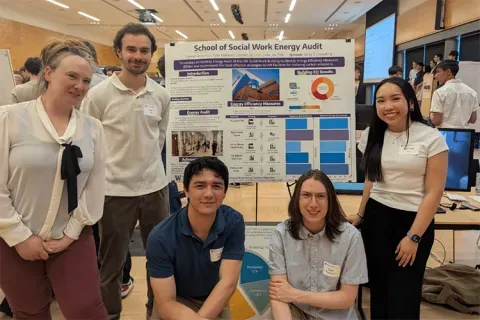
Mon, 10/13/2025 | UW Mechanical Engineering
Capstone collaboration leads to award
An ME capstone team received first place for its energy audit of the UW School of Social Work building.
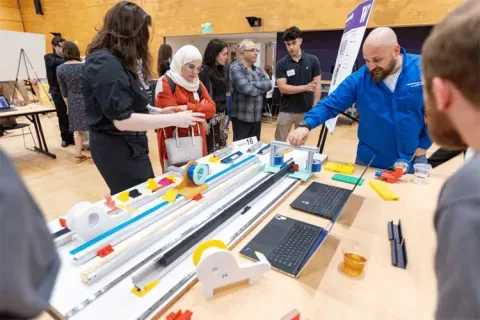
Mon, 07/07/2025 | UW Mechanical Engineering
Capstone creations
Students displayed innovative capstone design projects at the 2025 expo.
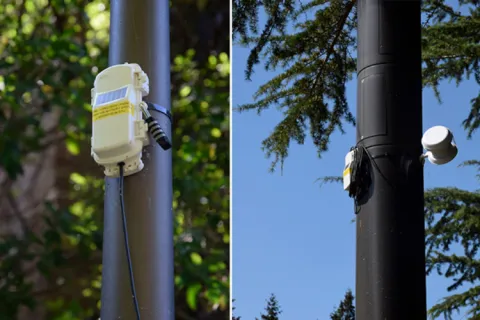
Fri, 09/20/2024 | UW Civil & Environmental Engineering
Smarter irrigation for a greener UW
A new project combines satellite data with ground sensors to conserve water and create a more sustainable campus environment.
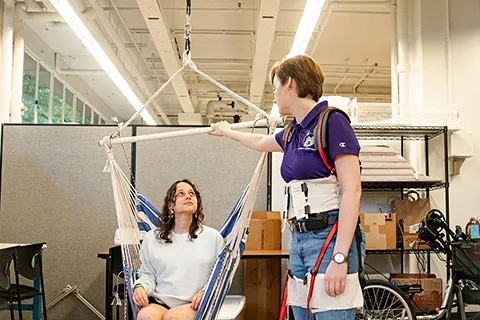
Mon, 09/09/2024 | UW Mechanical Engineering
Testing an in-home mobility system
Through innovative capstone projects, engineering students worked with community members on an adaptable mobility system.