
UW Applied Physics Laboratory (APL)
Enabling a Novel Low-Cost Salinity Sensor through Machine Learning
This team developed a robust machine-learning framework that corrects long-term drift in low-cost salinity sensors. Salinity data is vital for monitoring ocean health, tracking climate change, and managing sustainable aquaculture, yet high-quality equipment is often very expensive. While these low-cost sensors offer a scalable alternative compared to more expensive conductivity-temperature-depth instruments, they suffer from physical degradation like membrane hydration and ionophore leaching. By analyzing time-series data, which includes features such as voltage, impedance, and temperature, this model automatically separates true environmental variations from apparent changes caused by sensor drift.
Faculty Adviser(s)
John Kucewicz
Related News
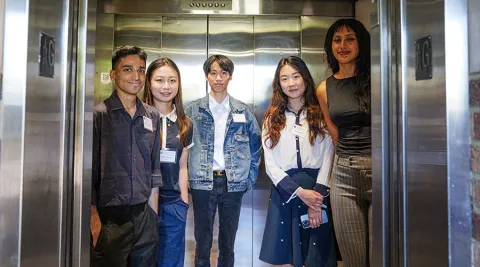
Elevating emerging engineers
The Industry Capstone Program partners UW Engineering students with sponsor organizations to devise innovation solutions to real-world problems.
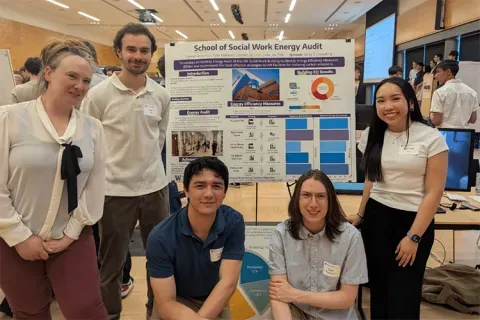
Capstone collaboration leads to award
An ME capstone team received first place for its energy audit of the UW School of Social Work building.
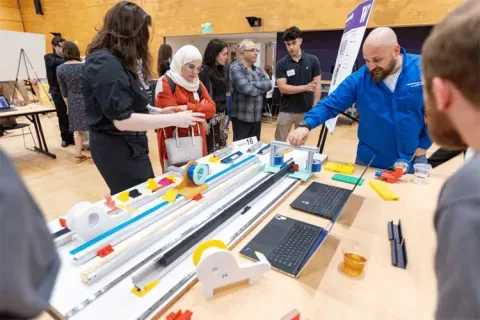
Capstone creations
Students displayed innovative capstone design projects at the 2025 expo.