
The College of Engineering welcomes 12 new faculty members this fall. These innovative scholars bring a wide range of expertise, from nuclear fusion to gene therapy and digital security to nanoscale modeling. They join a world-class community of researchers and educators dedicated to advancing engineering for the public good.
Aeronautics & Astronautics Bioengineering Chemical Engineering Civil & Environmental Engineering Computer Science & Engineering Human Centered Design & Engineering Mechanical Engineering
Aeronautics & Astronautics
Alan Kaptanoglu
Assistant Professor, Aeronautics & Astronautics; William D. Larsen Faculty Fellow
Education
Ph.D. Physics, University of Washington, 2021
B.S. Physics, Stanford University, 2016
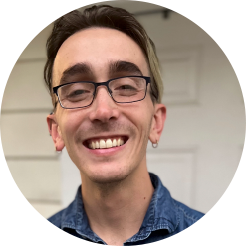
Alan Kaptanoglu joins Aeronautics & Astronautics from New York University, where he was an assistant professor of mathematics in the Courant Institute of Mathematical Sciences. His work lies at the intersection of applied mathematics, scientific machine learning and nuclear fusion, with a focus on developing theoretical and computational tools for modeling, control and optimization of plasmas and complex dynamical systems.
Kaptanoglu’s research explores stellarator optimization, numerical methods for plasma physics, and connections between dynamical systems theory and machine learning. He has contributed to advances in plasma modeling, sparse system identification, and fusion reactor design, and develops widely used open-source software for scientific computing and optimization.
Research focus
Nuclear fusion, stellarator optimization, numerical methods for plasma physics, scientific machine learning, dynamical systems
Bioengineering
Hichem Tasfaout
Assistant Professor, Neurology & Bioengineering
Education
Ph.D. Gene Therapy, University of Strasbourg, 2017
M.S. Pharmacology, University of Strasbourg, 2013
Pharm.D. Pharmacy, University of Oran, 2011
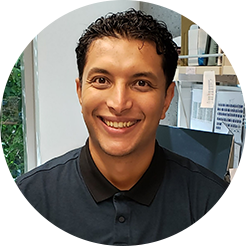
Hichem Tasfaout joins the University of Washington faculty after completing postdoctoral training in the laboratory of UW professor Jeffrey Chamberlain, where he developed a gene therapy platform that delivers large proteins to heart and skeletal muscles. His research focuses on innovative therapeutic strategies for neuromuscular disorders, particularly gene therapies for diseases caused by mutations in large or challenging genes.
During his Ph.D. training at the Institute of Genetics and Molecular and Cellular Biology in Strasbourg, France, Tasfaout developed therapeutic strategies for centronuclear myopathies that contributed to the founding of the biotechnology company Dynacure, which he co-founded. His laboratory now develops gene therapy platforms using split inteins and adeno-associated viral vectors to deliver large therapeutic proteins for multiple neuromuscular disorders.
Research focus
Gene therapy, neuromuscular disorders, muscular dystrophies, adeno-associated viral vectors, genetic medicines
Beiyu Lin
Assistant Teaching Professor, Bioengineering
Education
Ph.D. Computer Science, Washington State University, 2020
M.S. Mathematics, Washington State University, 2015
M.S. Applied Mathematics, Stony Brook University, 2013
B.S. Mathematics and Applied Mathematics, Shanghai Maritime University, 2011
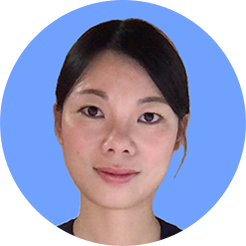
Beiyu Lin joins Bioengineering from the University of Texas at Dallas, where she was an assistant professor of instruction in computer science. Her work focuses on artificial intelligence in bioengineering, and she is interested in integrating AI into bioengineering education and preparing students to develop responsible, clinically relevant technologies. Her research has been recognized with the SIAM International Conference on Data Mining Best Applied Data Science Paper Award and the IEEE Rising Stars People’s Choice Award.
Research focus
Artificial intelligence in bioengineering, AI for healthcare, explainable and trustworthy AI, clinical decision support, physiological and behavioral data analysis, AI-enabled biomedical education
Rupak Rajachar
Associate Teaching Professor, Bioengineering
Education
Ph.D. Biomedical Engineering, University of Michigan, 2003
M.S. Biomedical Engineering, University of Michigan, 1997
B.S. Materials Science and Engineering, University of Michigan, 1994
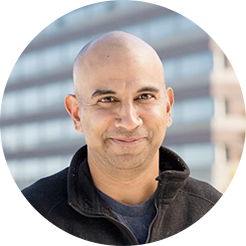
Rupak Rajachar is an associate teaching professor in Bioengineering and director of the Master of Applied Bioengineering program at the UW. His work spans biomaterials, bioengineering design and engineering education. He develops wound-healing technologies that aim to support human health as well as whale conservation efforts. His teaching blends experiential learning, clinical design, critical thinking and student mentorship. He is the recipient of multiple teaching awards as well as the UW College of Engineering Inclusive Excellence Faculty Fellowship.
Teaching focus
Biomaterials, bioadhesives, drug delivery and therapeutics, wound healing, bioengineering design, engineering education, marine conservation
Chemical Engineering
E. Daniel Cárdenas-Vásquez
John C. Berg Endowed Assistant Teaching Professor in Interfacial and Colloid Science, Chemical Engineering
Education
Ph.D. Chemical and Biomolecular Engineering, North Carolina State University, 2023
M.S. Chemical Engineering, North Carolina State University, 2018
B.S. Chemical Engineering, Universidad Nacional Pedro Ruiz Gallo, 2014
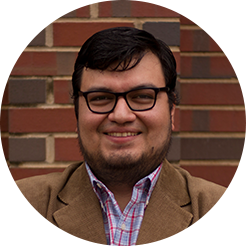
E. Daniel Cárdenas-Vásquez joins Chemical Engineering as the John C. Berg Endowed Assistant Teaching Professor in Interfacial and Colloid Science. Previously, he was a GCI Postdoctoral Fellow in Bioengineering at Chapman University. His work focuses on developing novel and accessible computational approaches to colloidal and biomolecular simulations at the meso- and nanoscale, using rheological tools to better understand complex fluids in confined environments such as extracellular matrices, injectable depots, and 3D-printed (bio) materials. His teaching and mentorship emphasize critical thinking, research methodology, and hands-on discovery in chemical engineering.
Research focus
Accessible colloidal and biomolecular simulations, meso- and nanoscale modeling, interfacial and colloid science, rheology of complex fluids, biomaterials, drug delivery systems, engineering education
Civil & Environmental Engineering
Abdolmajid (Mazi) Erfani
Assistant Professor, Civil & Environmental Engineering
Education
Ph.D. Civil Engineering, University of Maryland, College Park, 2023
M.S. Civil Engineering, University of Tehran, 2019
B.S. Civil Engineering, University of Tehran, 2017
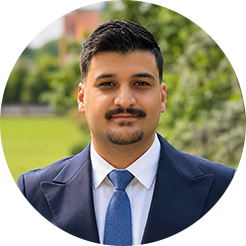
Abdolmajid (Mazi) Erfani joins Civil and Environmental Engineering from Michigan Technological University, where he served as an assistant professor. His research focuses on developing next-generation artificial intelligence systems for the built environment to help engineers plan, design, construct and manage civil infrastructure.
Erfani’s work spans AI-enabled infrastructure management, construction informatics, project delivery, workforce development, and smart and sustainable infrastructure systems. He uses data analytics and artificial intelligence to address challenges ranging from managing transportation projects to understanding workforce needs in the construction and transportation industries. His research has been supported by the National Science Foundation, U.S. Department of Transportation, National Academies of Sciences, Engineering, and Medicine, and state transportation agencies. He has received the Arthur M. Wellington Prize and Thomas Fitch Rowland Prize from the American Society of Civil Engineers.
Research focus
AI for the built environment, construction informatics, smart infrastructure, sustainable infrastructure, infrastructure analytics, explainable AI
Paul G. Allen School of Computer Science & Engineering
Andres Erbsen
Assistant Professor, Paul G. Allen School of Computer Science & Engineering
Education
Ph.D. Computer Science, Massachusetts Institute of Technology, 2022
M.Eng. Computer Science, Massachusetts Institute of Technology, 2017
B.S. Electrical Engineering and Computer Science, Massachusetts Institute of Technology, 2017
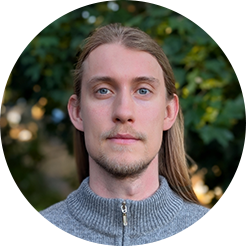
Andres Erbsen joins the Allen School from Google, where he worked as a senior software engineer and technical lead in Information Security Engineering. His research spans cryptographic implementations, compilers, embedded systems and processor designs, focused on building reliable and trustworthy computer systems using computer-checked mathematical proofs. He develops rigorous methods for verifying software, hardware and cryptographic infrastructure, with an emphasis on formalizing expert engineering practices and reducing the gap between intuition and machine-checked correctness.
Erbsen’s research has produced verification tools and techniques that have been deployed in widely used web browsers, operating systems and cryptographic libraries. He is the recipient of the PLDI Distinguished Paper Award, a HUMIES Gold Award and first place in the German IT Security Award for advances in high-assurance computing and formal verification.
Research focus
Formal verification, computer security, trustworthy systems, programming languages, cryptographic software, compilers, hardware-software co-design, proof-assisted engineering
Nicholas Sharp
Associate Professor, Paul G. Allen School of Computer Science & Engineering
Education
Ph.D. Computer Science, Carnegie Mellon University, 2021
M.S. Computer Science, Carnegie Mellon University, 2019
B.S. Engineering Physics, Computer Science and Mathematics, Virginia Tech, 2015
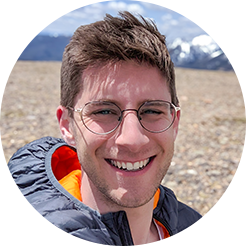
Nicholas Sharp joins the Allen School from NVIDIA, where he was a senior research scientist leading research in 3D machine learning, geometry and physical AI. Previously he was a postdoctoral fellow at the University of Toronto and the Fields Institute for Mathematics. Sharp’s research lies at the intersection of geometry processing, machine learning, computer graphics and computer vision. He develops new algorithms and computational representations that make working with geometric data more efficient, scalable and reliable across applications in computer graphics, robotics, simulation and artificial intelligence.
Sharp has received multiple awards, including best paper awards at SIGGRAPH, SIGGRAPH Asia and the Symposium on Geometry Processing, and an NSF Graduate Research Fellowship. He also develops widely used open-source software and libraries that support research and innovation in geometry processing and geometric machine learning.
Research focus
Geometry processing, 3D machine learning, computer graphics, computer vision, geometric computing, physical AI
Taylor Kessler Faulkner
Assistant Teaching Professor, Paul G. Allen School of Computer Science & Engineering
Education
Ph.D. Computer Science, The University of Texas at Austin, 2022
B.S. Computer Science, Denison University, 2016
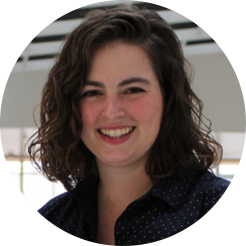
Taylor Kessler Faulkner teaches artificial intelligence, machine learning, and robotics in the Allen School, and recently led the creation of a graduate certificate in modern AI methods for working professionals and recent graduates. Her research spans human-robot interaction and machine learning. As a UW Data Science Postdoctoral Fellow in Siddhartha Srinivasa’s Personal Robotics Lab, she worked on assistive robotics, including a robotic feeding system for people with upper-extremity mobility impairments. She was an NSF Graduate Research Fellow and has contributed to award-winning research.
Research focus
Artificial intelligence, machine learning, human-robot interaction, robot learning, assistive robotics, reinforcement learning
Human Centered Design & Engineering
Samantha Speer
Assistant Professor, Human Centered Design & Engineering
Education
Ph.D. Robotics, Carnegie Mellon University, 2025
M.S. Robotics, Carnegie Mellon University, 2020
B.S. Electrical and Computer Engineering and Robotics, Carnegie Mellon University, 2018
Samantha Speer joins Human Centered Design & Engineering after completing her Ph.D. in Robotics at Carnegie Mellon University. Her research explores how robots can help people develop humanistic skills, with a particular focus on education, collaboration, and social development. Working at the intersection of human-robot interaction, haptics, and computer-supported collaborative learning, she designs both educational robotics systems and tangible interfaces that blend physical, interactive experiences with learning across disciplines.
Speer's projects include RoboLoom, a robotic weaving platform that blends computing, engineering and textile arts to support interdisciplinary education, and MindfulNest, robotic tools designed to help young children practice emotional regulation. Speer is the recipient of numerous awards including the CMU School of Computer Science Uber Presidential Fellowship.

Teaching focus
Educational robotics, human-robot interaction, haptics, computer-supported collaborative learning, tangible user interfaces, collaborative robotics
Mechanical Engineering
Tianli (Andy) Feng
Assistant Professor, Mechanical Engineering
Education
Ph.D. Mechanical Engineering, Purdue University, 2017
M.S. Mechanical Engineering, Purdue University, 2013
B.S. Physics, University of Science and Technology of China, 2011
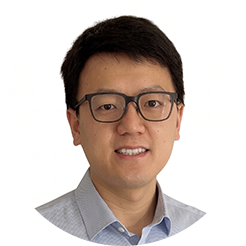
Tianli (Andy) Feng joins the Department of Mechanical Engineering from the University of Utah, where he received early promotion to associate professor with tenure. Prior to joining U of U, he served as a postdoctoral researcher and R&D associate staff scientist at Oak Ridge National Laboratory.
Feng’s research focuses on thermal science and engineering, with an emphasis on thermal transport under extreme conditions and predictive, physics-based modeling. His work spans high-temperature materials, electronics cooling, energy-efficient materials, and thermal transport at the nanoscale. His honors include the Brillouin Medal, NSF CAREER Award, R&D 100 Award and ASME Bergles-Rohsenow Young Investigator Award in Heat Transfer, among others. He was also named the University of Utah’s Mechanical Engineering Assistant Professor of the Year in 2024 and 2025.
Research focus
Thermal science and engineering, thermal transport under extreme conditions, heat transfer, predictive physics-based modeling, energy-efficient materials, electronics thermal management
Mithun Goutham
Assistant Teaching Professor, Mechanical Engineering
Education
Ph.D. Mechanical Engineering, The Ohio State University, 2025
M.S. Mechanical Engineering, The Ohio State University, 2020
M.Tech. Design Engineering, Birla Institute of Technology & Science, 2018
B.Tech. Production Engineering, National Institute of Technology Calicut, 2014
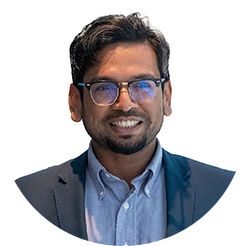
Mithun Goutham joins Mechanical Engineering from the Illinois Institute of Technology, where he was an assistant teaching professor. At the UW, he will teach robotics-focused courses in the M.S. in Technology Innovation program at the Global Innovation Exchange. His research focuses on optimization and control techniques for autonomous robot fleets and resilient manufacturing systems. Before entering academia, he spent four years as an engineering designer at Honda R&D. His teaching emphasizes hands-on learning through interdisciplinary, project-based courses that responsibly integrate AI into the curriculum.
Teaching focus
Robotics, system dynamics and controls, project-based engineering education, engineering design, responsible use of AI in engineering education
Originally published September 25, 2026