
Boeing
Life Cycle Assessment of Aerospace Paint Removal
This project addressed the need to better understand the environmental tradeoffs between conventional chemical paint stripping and laser "depainting" in aerospace applications, where coatings are removed for maintenance, repair, inspection, rebranding, and end-of-life processing. Chemical stripping has been widely used but involves formulations with significant environmental, health, and safety concerns, while laser depainting offers a potentially more sustainable alternative whose full impacts have not been quantified. This project aimed to develop a full life cycle assessment comparing chemical and laser depaint processes across upstream inputs, process operations, and end-of-life handling. This included consideration of factors such as stripper composition, laser equipment design, operating efficiency, personal protective equipment requirements, waste disposal, and effluent extraction. The project also included a literature review of chemical paint stripping practices and design considerations, along with a report documenting life cycle assessment inputs, results, and recommendations to inform future depaint system design and evaluation.
Faculty Adviser(s)
David Beck, Chemical Engineering
Related News

Elevating emerging engineers
The Industry Capstone Program partners UW Engineering students with sponsor organizations to devise innovative solutions to real-world problems.
Capstone collaboration leads to award
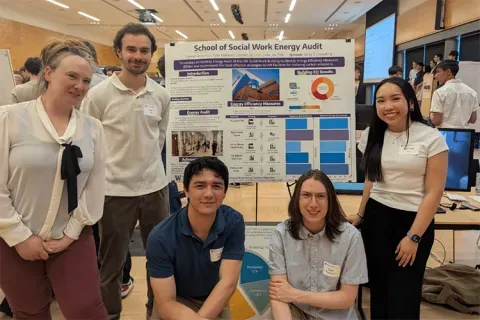
An ME capstone team received first place for its energy audit of the UW School of Social Work building.
Capstone creations
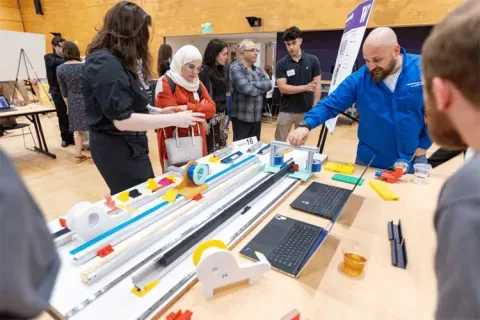
Students displayed innovative capstone design projects at the 2025 expo.