
Expedition Medicines
Super-Glue – Interactive Web Tool to Facilitate Chemistry <> ML Collaboration
Machine learning is poised to make an enormous impact in the field of pharmaceutical chemistry. The rapidly increasing scale, throughput and accuracy of biological assays provides the perfect substrate for machine learning algorithms to make sense of the complex biological mechanisms that underpin disease in a way that humans are incapable. However, the intuition built from decades of drug discovery experience by expert medicinal chemists is a vital source of knowledge that is missing from the models built from these assays. Incorporating expert rules into our modeling strategies not only helps improve the performance of our models, but it is also crucial for building trust across domains and integrating ML into current drug discovery pipelines. This student team will work to create an interactive tool that will help facilitate this collaboration by providing a flexible framework for ML and MedChem teams to share knowledge through chemical annotations, computations, and predictions in a scalable and data-driven manner. Students will design an interactive web application that satisfies the following criteria: 1. Users can load and interact with static molecular databases containing structures, predicted properties and other metadata of interest 2. Users can run similarity searches on databases of known drug-like molecules and display the compounds that are most similar to a compound of interest 3. Users can interactively highlight, annotate and modify chemical substructures which can then be exported in a machine-readable format 4. STRETCH: Allow users to submit compounds through computational/ML pipelines served by cloud infrastructure Performance will be measured by successful implementation of all the above features in code. This will encompass all of the key steps in the software development cycle including the creation of design docs, submission of pull requests, code reviews, and CI/CD testing. By the end of the capstone, students will deliver a code repository containing all of the back-end and front-end infrastructure required for hosting the interactive tool on a web-based server. Students will also be asked to perform a live demo of the tool for the medicinal chemistry team at FL94.
Faculty Adviser(s)
David Beck, Chemical Engineering
Related News
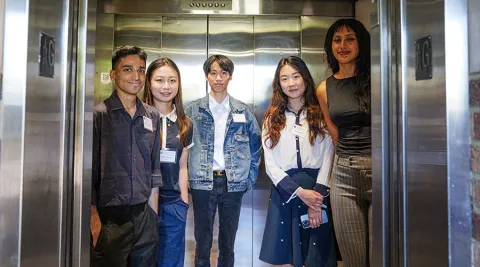
Elevating emerging engineers
The Industry Capstone Program partners UW Engineering students with sponsor organizations to devise innovation solutions to real-world problems.
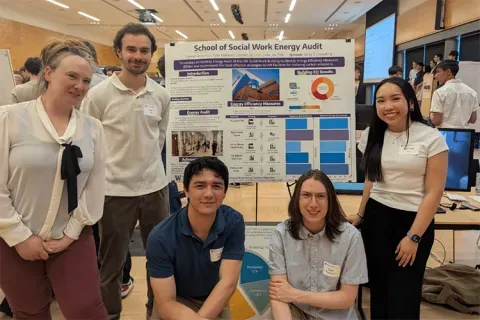
Capstone collaboration leads to award
An ME capstone team received first place for its energy audit of the UW School of Social Work building.
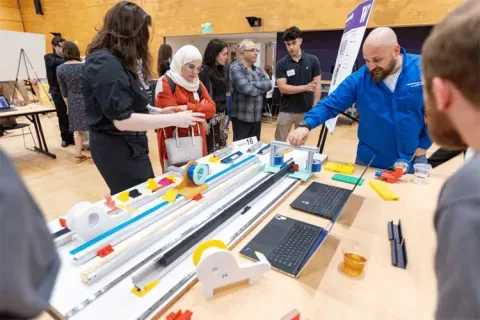
Capstone creations
Students displayed innovative capstone design projects at the 2025 expo.