
Boeing
Evaluation of Plasma Treatment Detection Methods for Thermoplastic Substrates
Atmospheric plasma has been shown to activate inert bonding surfaces, such as thermoplastic substrates. Structural repair of thermoplastic substrates requires specific plasma treatment parameters to be employed - power, number of passes, speed of a pass, and stand-off distance between substrate and the plasma source. To the naked eye, a machined thermoplastic composite surface that is plasma treated appears no different from one that is not treated. This creates a challenge confirming whether the surface was adequately treated or not. There exist potential detection methods for determining whether plasma treatment was adequately performed. This student team will work to identify potential non-contact and contact methods to detect plasma treatment and then characterize the effect of those methods, such as potentially contaminating the surface, on bond quality. To achieve this objective, this student team will work to identify and evaluate the relative effects of plasma detection methods on bond quality of machined thermoplastic (TP) substrates, by performing the following: 1. Literature survey and selection of non-contact and contact methods for detecting plasma surface treatment. 2. Design of Experiments (DoE) methodology to establish the optimum test matrix - evaluate effectiveness of detection method(s) and the effect of the detection method(s) on bond quality 3. Perform Double Cantilever Beam (DCB) testing per ASTM D5528 (Mode 1 Interlaminar Fracture Toughness test) **Obtain or fabricate substrate test coupons using carbon reinforced thermoplastic (TP) materials **Obtain or fabricate repair test coupons using carbon reinforced thermoset material **Plasma Treat TP coupons per standard approved treatment parameters (to be provided by Boeing) using robot or mechanical fixture controlled plasma heads. **Subject some plasma treated TP coupons to plasma detection method(s) **Apply mitigation techniques to remove any potential contamination **Bond DCB coupons (TP coupons bonded to thermoset coupons) per standard process using adhesive and perform DCB tests 4. Document test report Boeing designs capstone projects to be multi-disciplinary, encouraging engagement of students with diverse backgrounds and use of universal design principles. Mentors will offer students opportunities to expand their skill set beyond university education. Boeing is a global corporation and these projects enable maturation of technologies that benefit our diverse global market.
Faculty Adviser(s)
Luna Yue Huang, Materials Science & Engineering
Hanson Fong, Materials Science & Engineering
Related News
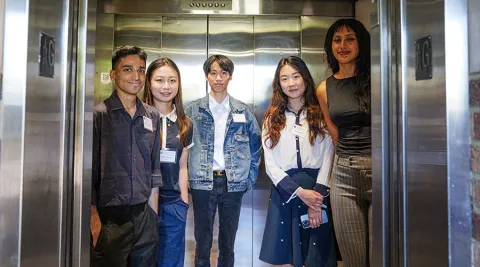
Elevating emerging engineers
The Industry Capstone Program partners UW Engineering students with sponsor organizations to devise innovative solutions to real-world problems.
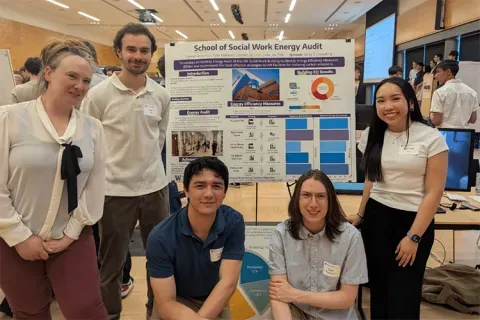
Capstone collaboration leads to award
An ME capstone team received first place for its energy audit of the UW School of Social Work building.
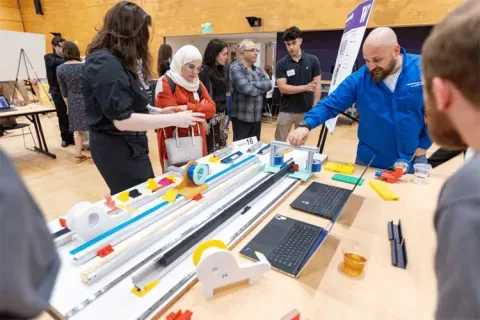
Capstone creations
Students displayed innovative capstone design projects at the 2025 expo.