
GE Vernova
Battery Scheduling for Carbon Reduction
This student team worked to research load + solar + storage systems and the ways to best schedule energy storage for minimum greenhouse gas emissions. Using historical grid carbon intensity data from https://www.watttime.org/ or other sources, students attempted to first determine net carbon emissions for a typical residential or commercial load over the course of a month. Next, students worked to assess the impact of installing a PV system, assuming a system size and output profile using historical weather data and information and a basic PV production model. Finally, the students worked to design a battery energy storage system and controller that couples with the solar installation to minimize the net carbon footprint. The student team attempted to design the battery controller (rule-based, PID, LP, etc.) to steer battery charging/discharging during day-to-day operations towards a least carbon objective, taking into account load, grid carbon intensity data and solar output.
Faculty Adviser(s)
Payman Arabshahi, Electrical & Computer Engineering
Related News

Elevating emerging engineers
The Industry Capstone Program partners UW Engineering students with sponsor organizations to devise innovative solutions to real-world problems.
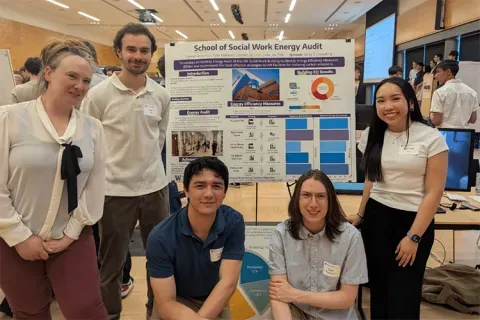
Capstone collaboration leads to award
An ME capstone team received first place for its energy audit of the UW School of Social Work building.
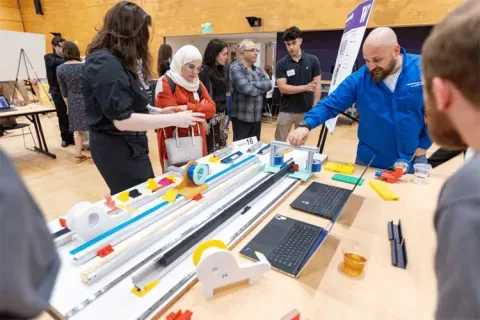
Capstone creations
Students displayed innovative capstone design projects at the 2025 expo.