Search for programs and certificates

Engineering professional programs offer application-focused, graduate-level education taught by renowned faculty, with curricula guided by industry leaders.

Students benefit from the expertise of UW Engineering faculty, who are leaders in their fields, and from the diverse backgrounds of classmates. The degrees and certificates in engineering are developed in partnership with regional industry leaders to give you access to important contacts and expertise.

To learn more about research-driven master's degrees and Ph.D. programs, please explore options on our graduate admission page

Engineering graduate programs and certificates

Applied Master's Program in Materials Science & Engineering

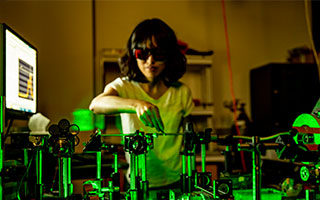
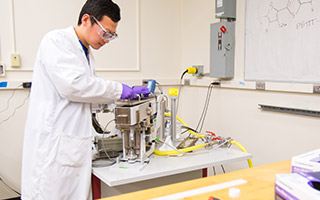
Student in lab setting wearing eye protection

Gain relevant experience for careers in a variety of fields including aerospace, biomedicine, energy, manufacturing, transportation and more. Graduates of the program pursue careers in research and development, serve as consultants and become entrepreneurs. For those students interested in pursuing a doctorate, AMP can provide a stepping stone into our Ph.D. program.

Contact: karenlw@uw.edu     206-543-2740

Civil Engineering: Energy Infrastructure

The online Master of Science in Civil Engineering: Energy Infrastructure program prepares students to plan, design, construct and manage energy related infrastructure projects. The program responds to current changes in the country’s energy infrastructure, which is quickly moving from traditional fossil fuel systems to renewable sources. The changes are driven by both climate change concerns and technological advancements.

This program is designed to be delivered online. 

Contact: ceginfo@uw.edu    

Construction Engineering

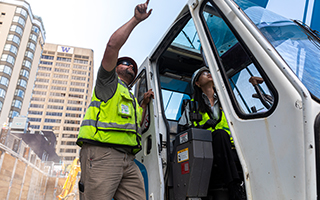
Worker in construction zone

Focusing on the heavy construction industry, this program gives engineers the technical skills and management abilities critical for leading major infrastructure projects. The curriculum covers the most recent developments and fundamental principles in construction engineering, knowledge that is extremely valuable in any professional role.

This program is designed to be delivered online. 

Contact: ceginfo@uw.edu    

Construction, Energy, and Sustainable Infrastructure

Person wearing hard hat working on solar panels

Specific focus areas include sustainable roads, power generation facilities, energy-efficient buildings, social sustainability, engineering in developing communities, and construction engineering. Sustainable community research is an increasing focus for the CESI Group and spans a wide range of topics, including recent work with refugee settlements and their infrastructure needs.

This program is in-person at the UW Seattle campus with an Autumn-only start each year. 

Contact: ceginfo@uw.edu    

Environmental Engineering

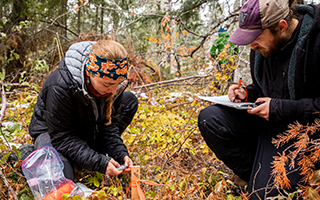
Two people working in a forest taking field notes

The program provides a solid background in both traditional and emerging areas of environmental engineering. These areas include drinking water and wastewater treatment, air and water quality, remediation of contaminated sites and resource recovery. Graduate students work closely with Environmental Engineering faculty who guide and supervise their research and studies. They also interact with leaders in the local professional community, many of whom are UW graduates, through courses taught by practitioners, field trips, seminars and professional society meetings.

This program is in-person at the UW Seattle campus with an Autumn-only start each year. 

Contact: ceginfo@uw.edu    

Geotechnical Engineering

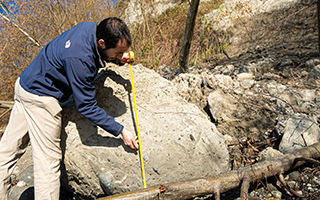
Person measuring large rock

UW CEE’s Geotechnical Engineering Master’s Program is one of the oldest in the United States. Founded in 1935, the program has produced outstanding students who have succeeded in practice and academia. The program provides a solid background in all traditional areas of geotechnical engineering and allows students to focus on areas of particular interest, including geotechnical earthquake engineering, landslide hazards, soil mechanics and foundation engineering. Graduate students work closely with faculty and also interact with leaders in the local professional community, many of whom are UW graduates, through special courses taught by practitioners, field trips, seminars and professional society meetings.

This program is in-person at the UW Seattle campus with an Autumn-only start each year.

Contact: ceginfo@uw.edu    

Hydrology and Hydrodynamics

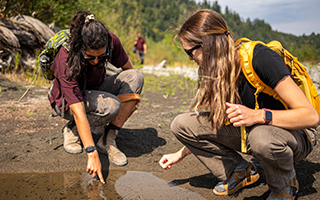
Two students working in the field near nature

UW CEE’s Hydrology and Hydrodynamics Master’s Program focuses on physical, chemical and biological processes in freshwater systems. The program provides both a solid background in all traditional areas of hydrology and hydrodynamics, as well as technological advances in numerical modeling, environmental observations and monitoring, and satellite remote sensing to address growing challenges in the natural and built environment with global change. Graduate students work closely with faculty and also interact with leaders in the local professional community, many of whom are UW graduates, through special courses taught by practitioners, field trips, seminars and professional society meetings.

This program is in-person at the UW Seattle campus with an Autumn-only start each year. 

Contact: ceginfo@uw.edu    

Master of Aerospace Engineering (MAE)

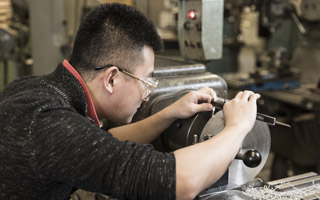
Student working on machine

The Master of Aerospace Engineering (MAE) is a multidisciplinary professional graduate degree for recent graduates as well as working professionals. The MAE emphasizes the applied skills and experience needed in industry. The MAE is a terminal, coursework-only degree (does not lead to a Ph.D.). This degree is meant to be completed part-time in three years. 

This program is offered online only; courses meet synchronously online in the evening.

Contact: aeropro@uw.edu     206-543-8919

Master of Applied Bioengineering (MAB)

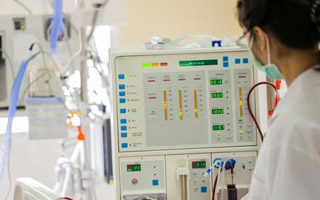
Student wearing lab coat working with medical equipment

The MAB trains students to apply engineering design to address today’s clinical challenges and fulfill the market-based demands of industry and medicine for biotechnology. Students collaborate with world-class faculty from UW and UW Medicine, and local industry partners to transform biomedical research into technologies for improving patient care. Graduates have in-demand skills for work in biomedical industry and translational research.

Contact: bioeng@uw.edu     206-685-2000

Master of Industrial & Systems Engineering (MISE)

Person holding pen close to laptop

The MISE is a non-thesis degree designed for engineers, scientists, and mathematicians with at least two years of work experience in a technical environment who wish to excel as complex system thinkers in today's global business environment.

Available online and on campus.

Contact: isemengr@uw.edu    

Master of Science in AI & Machine Learning for Engineering

Person looking at projected lights that resemble outer space

The Master of Science in Artificial Intelligence (AI) and Machine Learning (ML) for Engineering is a flexible master's degree designed for engineers to quickly acquire advanced AI and ML skills and apply these tools to engineering fields. In addition to gaining foundational AI and ML skills applicable to all engineers, students will advance their careers by completing complete domain-specific training to learn state-of-the-art AI and ML techniques specific to their field. The degree is obtained by completing the Graduate Certificate in AI & ML for Engineering, a second domain-specific certificate, and an applied engineering capstone project.

Contact: ai4eng-advising@uw.edu    

Master of Science in Human Centered Design & Engineering

Students sitting around table on laptops listening to lecture

This program prepares its graduates for leadership roles in user experience research and design, interface design, interaction design, product design, and human-computer interaction. A flexible schedule allows students to attend part time or full time.

Available on campus with full-time and part-time options.

Contact: askhcde@uw.edu    

Master of Science in Mechanical Engineering (MSME)

Student working on EcoCar

The Master of Science in Mechanical Engineering (MSME) will prepare graduates for professional careers in Mechanical Engineering. We offer coursework in a variety of areas including robotics, health, renewable energy, material science, and manufacturing. This degree is intended for students with undergraduate degrees in mechanical engineering or a closely related field. However, if you have completed standard math, natural science, and engineering fundamental courses, you may qualify for admission to the MSME degree.

Available on campus and online. Flexible part-time and full time options.

Contact: megrad@uw.edu     206-616-0981

Master of Science in Technology Innovation (MSTI)

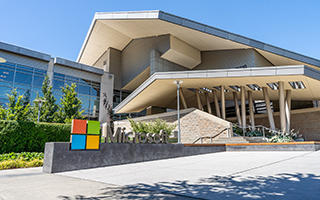
Microsoft campus exterior

Offered in both full-time and hybrid formats, the 21-month MS in Technology Innovation program provides an accelerated pathway into tech careers through hands-on, project-based learning across engineering, business, and design. Students collaborate with industry experts from University partners and apply their skills through six-month, sponsored capstone projects. In-person learning takes place at the University's home on Microsoft’s Redmond campus, immersing students in a working technology environment alongside researchers, builders, and industry partners. Graduates commonly move into roles in product management, technical program management, software engineering, and user experience design.

Contact: msti@uw.edu    

Master’s of Engineering in Multidisciplinary Engineering

A woman in professional attire with her arms crossed and a confident smile

The Master’s of Engineering in Multidisciplinary Engineering is a unique program that lets students complete two certificates of their choice, with options in 15+ specialized engineering topics: aerospace and aeronautics, engineering leadership, materials and composites, controls and dynamic systems, battery engineering and more. Students finalize their degree with an industry-based capstone project, applying knowledge from their two certificates to solve a multidisciplinary problem.

Contact: engr-professional@uw.edu    

Master’s of Science in Chemical Engineering: Data Science Option

Working at lab with machines

The intensive 1-year M.S. program pairs applied data science instruction with real-world project experience in a chemical engineering and molecular science context. Students complete fundamental ChemE coursework and participate in an industry-sponsored capstone project. Master’s students also have the option of a 2-year research-focused program intended as a bridge to a Ph.D. in chemical engineering.

Contact: jacqueh2@uw.edu    

Online Master of Pharmaceutical Bioengineering (PharBE)

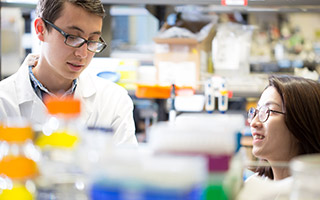
Students working in lab

The Master of Pharmaceutical Bioengineering program (PharBE) is an online degree program designed to enable working engineers, scientists, researchers and professionals in the biotechnology, pharmaceutical and related industries to explore advanced education in the areas of drug discovery and design, pharmaceutics and translational pharmaceutics, clinical drug and device development, molecular and cellular biology, pathophysiology and pharmacology.

Available online.

Contact: bioeng@uw.edu     206-685-2000

Professional Master's Program in Electrical Engineering

conceptual image of a computer chip

The Professional Master’s Program (PMP) focuses on cutting-edge technical topics and the latest university research, giving students the expertise needed to drive innovation. Designed for full-time students as well as professionals already working in the field, the PMP prepares graduates for new and rewarding career opportunities. The program leads to a Master of Science in Electrical Engineering (MSEE) degree.

Evening classes available with full-time and part-time options.

Contact: pmp@ece.uw.edu    

Professional Master's Programs in Computer Science & Engineering

Master's students at graduation ceremony

The Allen School’s Professional Master’s Program (PMP) is designed for fully-employed professionals who are interested in continuing on their career paths while acquiring critical skills to move them into positions and projects of greater responsibility and impact. The PMP offers unique benefits to working professionals, including an opportunity to interact with other talented area professionals in a flexible, part-time learning environment that blends focused academic coursework and exciting colloquia offering practical engineering and development insights and tools.

On campus, evening option available.

Contact: masters@cs.washington.edu     206-543-1695

Structural Engineering and Mechanics

Bridge

UW CEE’s Structural Engineering and Mechanics Master’s Program offers students a comprehensive, practical and theoretical background that prepares them be successful in engineering practice or a future Ph.D. program. The program offers graduate students a wide range of courses in structural design, multi-hazard structural response, classical theory and advanced structural analysis techniques. The structures faculty members have expertise in each of these areas, with ongoing research related to many of these topics and collaboration with the local professional community.

This program is in-person at the UW Seattle campus with an Autumn-only start each year. 
 

Contact: ceginfo@uw.edu    

Supply Chain Transportation and Logistics

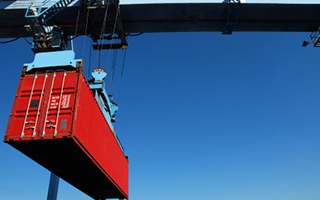
Shipping container

The University of Washington online Master of Supply Chain Transportation & Logistics is for working professionals who want to advance their careers in supply chain transportation and logistics. This program is also a great fit for business systems analysts, process analysts, project managers or people interested in transportation or logistics consulting. Featuring a balance of engineering and business courses, the curriculum emphasizes four cornerstone themes: AI/ ML and Optimization; Data-driven decision making; integration and collaboration; and critical thinking.

This program is designed to be delivered online. 

Contact: ceginfo@uw.edu    

Sustainable Transportation

Lights created by cars driving on highway

The UW Online Master of Sustainable Transportation prepares students to tackle sustainable transportation and land use planning challenges through interdisciplinary study of key topics in transportation planning, policy and analysis. Students will explore topics in mass transit, economic development, livable communities, population density, climate change, alternative energies and more.

This program is designed to be delivered online.
 

Contact: ceginfo@uw.edu    

Transportation Engineering

Person standing in front of train

Courses provide a solid background and skill set in intelligent transportation systems, ride-source sharing, transit system planning, transportation data analytics, travel demand forecasting, traffic systems operations, freight transportation, human factors and analytical methods in transportation. Students also obtain hands-on experience in particular areas of interest, including traffic simulations, smart transportation system control and traveler information systems. Graduate students work closely with faculty and interact with leaders in the local professional community, many of whom are UW graduates, through special courses taught by practitioners, field trips, seminars and professional society meetings.

This program is in-person at the UW Seattle campus with an Autumn-only start each year. 

Contact: ceginfo@uw.edu