
Tesla
Integrated Heating and Emissions Abatement System for Industrial Ovens
Automotive paint, e-coat, and powder coat ovens typically rely on standalone Regenerative Thermal Oxidizers to abate Volatile Organic Compounds (VOC) emissions, adding significant capital cost and factory space requirements. This project developed a conceptual integrated Regenerative Thermal Oxidizer (RTO) approach within oven heater boxes to reduce system complexity, cost, and footprint while supporting applicable NFPA, air district, and building code requirements. The concept used regenerative thermal oxidation as the basis of design, with targets for VOC destruction, thermal efficiency, cold-start readiness, and modular airflow capacity across different oven applications. The work defined the proposed system through engineering calculations, computational fluid dynamics (CFD) analysis, conceptual layouts, P&IDs, functional diagrams, a parametric 3D design, and a cost comparison against a traditional standalone abatement system.
Faculty Adviser(s)
John Kramlich, Mechanical Engineering
Related News

Elevating emerging engineers
The Industry Capstone Program partners UW Engineering students with sponsor organizations to devise innovation solutions to real-world problems.
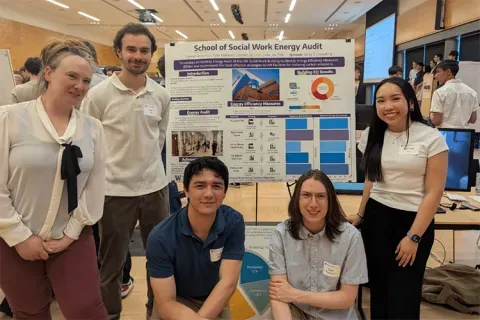
Capstone collaboration leads to award
An ME capstone team received first place for its energy audit of the UW School of Social Work building.
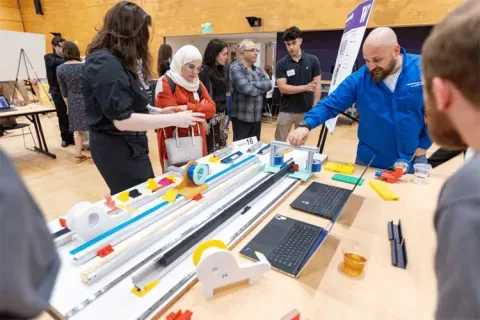
Capstone creations
Students displayed innovative capstone design projects at the 2025 expo.