
By Ed Kromer
UW Engineering researchers are adapting hydrogels to catalyze advances in farming, wastewater treatment, healthcare, biofuel and more.
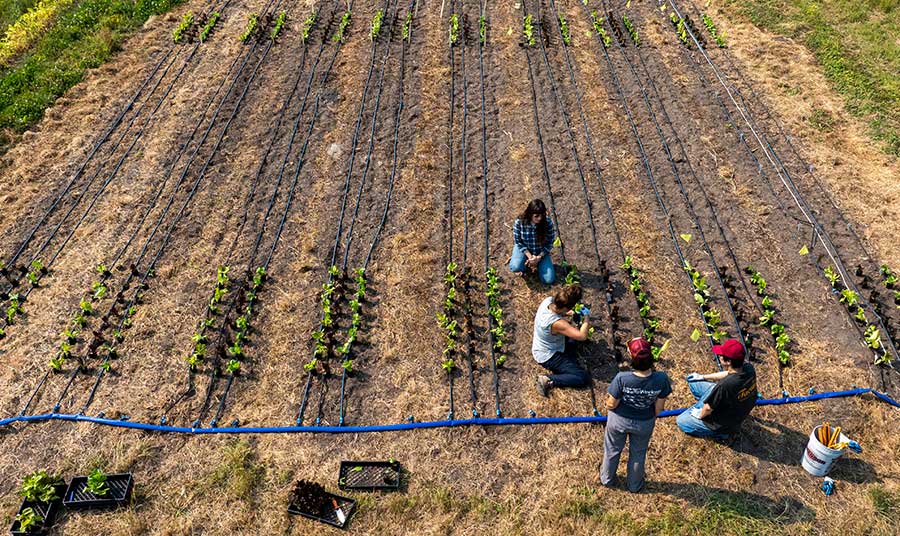
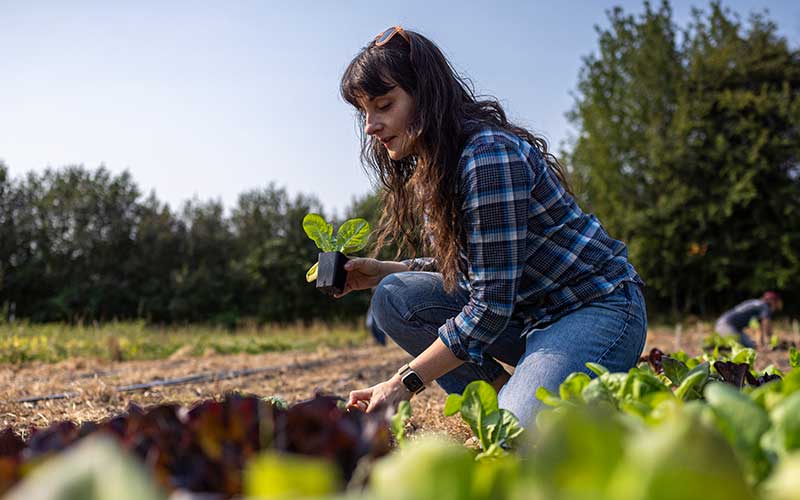
Researchers in the Winkler Lab plant seedlings bedded with experimental BioBeads at 21 Acres farm. Mark Stone / University of Washington
You won’t find a more charming spot to host a revolution than the bucolic landscape of 21 Acres farm in Woodinville, Washington.
Among its colorful plots of flowers and vegetables, UW researchers are field testing a regenerative technology that could transform the way we approach agriculture.
It begins in tidy rows of delicate lettuce and scallion seedlings that Korena Mafune and Renee Davis have bedded with a sprinkling of hydrogel BioBeads formulated in the UW civil and environmental engineering (CEE) lab of Professor Mari Winkler. These biodegradable bundles, the size of couscous pearls, contain beneficial bacteria, which help plants absorb nitrogen and phosphorus, and mycorrhizal fungi, which connect to, extend and strengthen root systems.
The result is higher yields of healthier plants that are more resistant to pests, disease and drought — and less dependent on chemical amendments. At scale, it could be a viable alternative to expensive fertilizers that disrupt soil health, says Mafune, ’13, ’15, ’21, a soil ecologist and research scientist in the Winkler Lab.
BioBead is, essentially, a probiotic for soil.
“Nature knows how to fix itself,” says Davis, a CEE doctoral student and mycologist in the lab. “We’re just accelerating the process.”
And refining the package. BioBead is one of myriad applications of the hydrogel, a recurring motif in the Winkler Lab, where students and researchers are empowered to explore a range of applications — and take them beyond the academic and into the entrepreneurial.
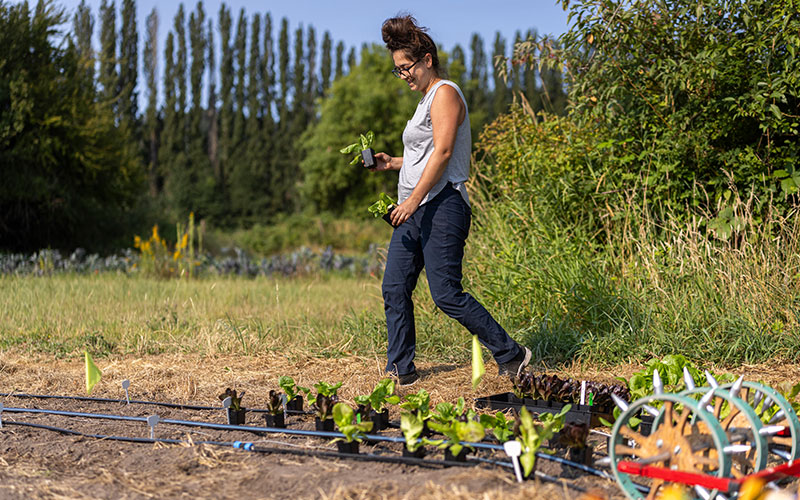
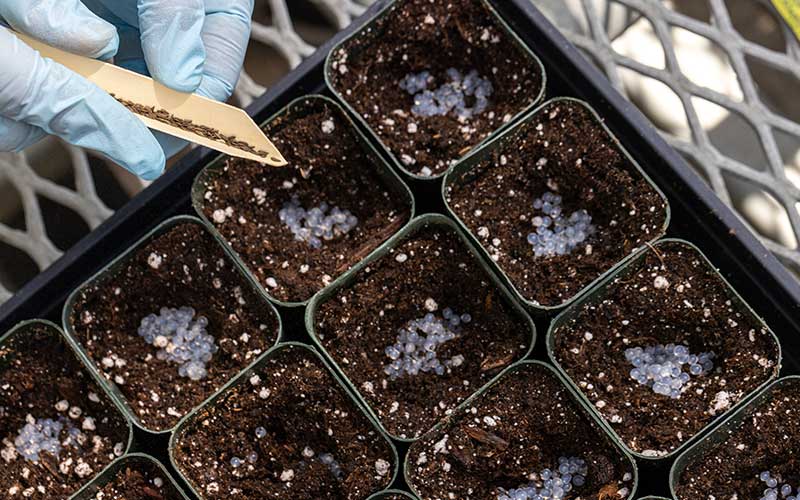
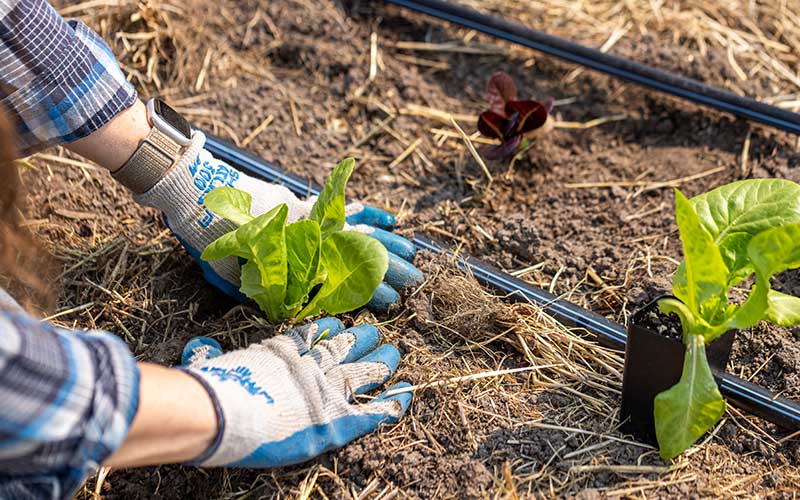
Research scientist Korena Mafune (top left) prepares lettuce seedlings cultivated with biodegradable hydrogels made of beneficial bacteria and fungi in the UW Biology Greenhouse (top right) for planting in a field test at 21 Acres farm (bottom right). Mark Stone / University of Washington
Hydrogels everywhere
As Mafune describes it, the Winkler Lab is “hydrogels galore.”
It didn’t start that way. During her doctoral studies at Delft University of Technology in the Netherlands and throughout her early career, Winkler developed new wastewater treatment techniques — and especially the application of Anammox, a breakthrough biological process that uses bacteria to remove nitrogen pollutants from wastewater with minimal energy and chemicals.
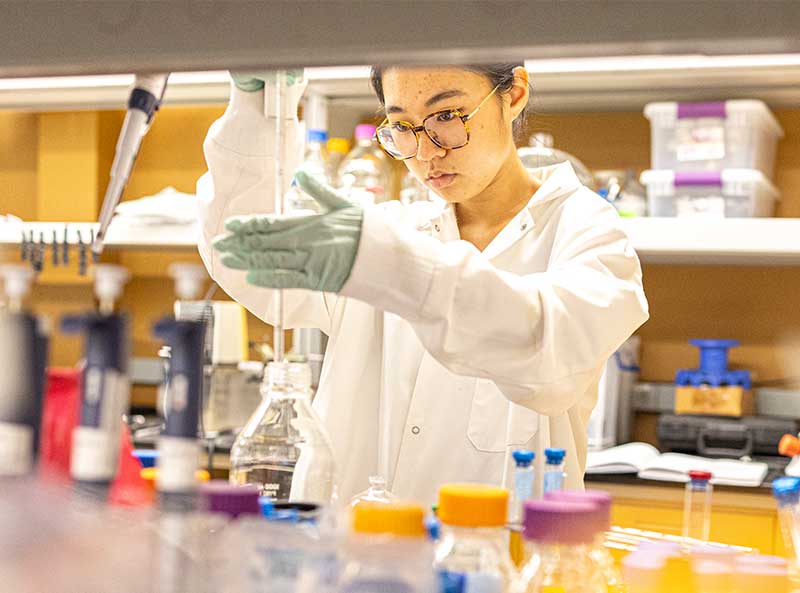
Undergraduate researcher Happy Tju works in the Winkler Lab. Mark Stone / University of Washington
A decade ago, she was approached by the U.S. Defense Advanced Research Projects Agency with a project tangentially related to her expertise: to create a wearable system that could collect, sterilize and recycle the urine of soldiers in the field to keep them hydrated and lighten their load.
Winkler saw an intriguing engineering challenge: miniaturizing treatment of a different form of wastewater.
At the time she had begun experimenting with hydrogels — soft, flexible networks of polymer chains that can absorb and retain large volumes of liquid without dissolving. Hydrogels were already being used in drug delivery, tissue engineering, cosmetics and electronics.
Winkler had a novel use in mind.
“We needed to encapsulate bacteria that capture the toxins,” she says. “So, we put them into hydrogels.”
Wastewater treatment
Removing toxins in a closed space inspired Winkler to think differently about the approach to wastewater treatment that she had studied her entire career.
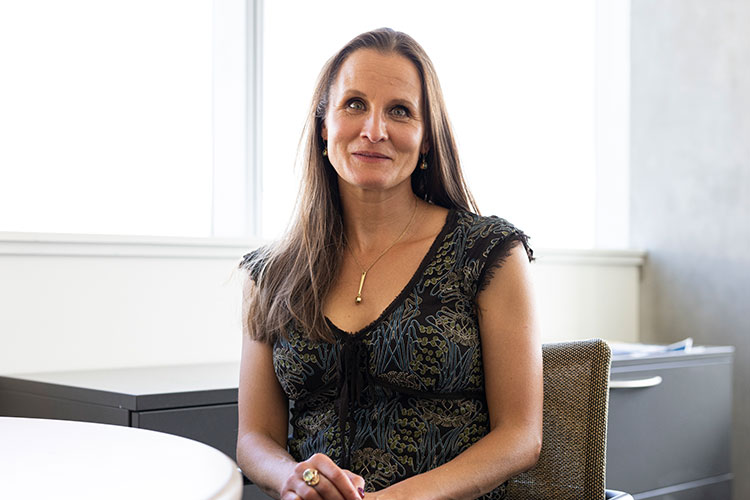
Mari Winkler is expanding the applications of hydrogel technology. Mark Stone / University of Washington
The problem facing large treatment facilities — especially coastal ones — is one of scale. Growing populations produce more wastewater that needs to be detoxified before it flows back into the ocean. This puts a strain on treatment facilities like Seattle’s West Point, which are often tightly wedged into a coastal landscape.
“There are more people using more water, but the treatment plants don’t have space to expand,” Winkler says. “They need to intensify the space they have.”
Hydrogels can allow this to happen.
Encased in a carrier that won’t degrade, the cargo of wastewater hydrogels is formulated to capture nitrogen and other common toxins, like floating filters that clean water as it passes through. Winkler says they allow space-constrained plants to increase their capacity without expanding their footprint.
“It’s a closed-loop cycle, which makes it so effective,” she adds.
Gut health
In another corner of the Winkler Lab, researchers are applying the same principle to help people with chronic kidney disease, who require dialysis or medications to filter phosphate, urea and other toxins from their bodies.
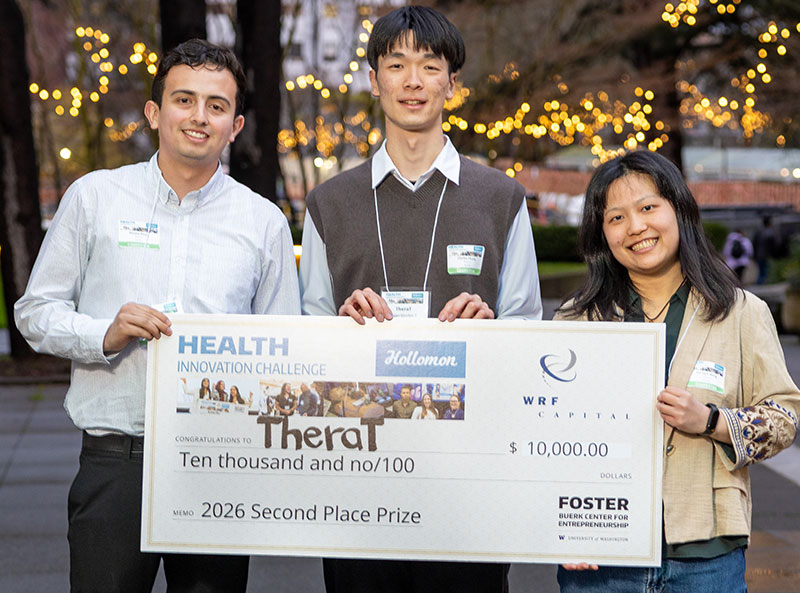
Success at the Hollomon Health Innovation Challenge was a launch pad for Thera-T, led by doctoral students Ming-Che Chung (center) and Pei-Hsin Wang (right). Buerk Center for Entrepreneurship
The team’s solution, Thera-T, is a drinkable hydrogel designed to remove toxins from the gut — think boba tea with medical benefits. Its tiny spheres contain microbes, enzymes and binders that capture and break down toxins before they enter the bloodstream. Once they have done their job, the gels pass naturally through the digestive tract, minimizing the need for dialysis.
“We’re trying to break this vicious cycle at its source: the gut,” says CEE doctoral student Ming-Che Chung.
The researchers believe their drinkable technology, which has shown promise in early testing, could potentially be expanded to remove a range of contaminants from the human body — from microbial toxins to pesticides to microplastics.
Biofuel and biomass
The lab is also exploring new uses for hydrogels in sustainable production through two projects, both of which are in early stages of development.
One creates a bioreactor process that transforms lignin — abundant organic polymers in trees, grasses and flowers that are difficult to break down — into biofuel. Fungal organisms convert lignin into sugars, and microbes convert the sugars into ethanol.
“Imagine converting tree bark to jet fuel,” Winkler says.
Another plan uses hydrogels to grow algae at scale, producing biomass and removing harmful carbon from the atmosphere.
Bao Nguyen Quoc, Ph.D. ‘21, a former doctoral student and postdoc in the lab, explains that only a small fraction of Earth’s surface can support carbon-capturing plants, while vast expanses of ocean remain largely unproductive because they lack nutrients required to grow algae.
Enter SeaO2 Lockers, a plan to encapsulate microalgae seed cells and nitrogen-fixing bacteria in hydrogels, allowing algae to grow in floating farms away from fragile coral reefs and marine habitats. The algae could capture carbon and be harvested for biofuels, pharmaceuticals, food and animal feed.
Entrepreneurial academics
Communities of organisms together, combining forces and harnessing their different interactions and synergies, are really inspiring to me. There is a core concept to each of these different threads that makes it feel like a community technology. It feels like the future.
Renee Davis
Doctoral researcher, co-founder of SymbioSoil
The range of applications reflects the proactive culture Winkler fosters in her lab. She credits her graduate school mentor, Anammox pioneer Mark van Loosdrecht, with empowering independent inquiry and instilling in her a tendency toward research with purpose — to benefit real people in the real world.
Her lab attracts students and researchers with similar passion, and each hydrogel project is being developed with a pathway to the marketplace.
BioBead, incorporated under the business name SymbioSoil, won the 2026 Dempsey Startup Competition and has received commercialization funding from CoMotion, Washington Research Foundation and the USDA. Co-founders Mafune and Davis are ramping up field studies and collaborations with farming organizations with an eye to scale manufacturing and pilot a market product next year.
Wastewater treatment technologies are being tested in treatment plants in Seattle, Everett, Edmonds and the East Coast.
Thera-T, on its journey to commercialization, won second prize at the 2026 Hollomon Health Innovation Challenge, received Innovation Gap funding from CoMotion and two awards from the biotech activator Nucleate.
And SeaO2 Lockers continues moving forward, with Quoc returning to the lab as a volunteer in time off from his environmental consulting job.
That’s the point of the lab — and the people who animate it: advancing technology for the common good of people and the planet.
Davis, who left a corporate R&D leadership role to work on BioBead, sees the shape of a metaphor in so many disparate projects and passionate people revolving around the humble hydrogel.
“Communities of organisms together, combining forces and harnessing their different interactions and synergies, are really inspiring to me,” she says. “There is a core concept to each of these different threads that makes it feel like a community technology. It feels like the future.”
Related stories
HEALTH & MEDICINE
A bubble tea approach to kidney disease
CLIMATE SOLUTIONS
Cleaner wastewater — without building new tanks
Originally published August 31, 2026