
A Global Hub for Neural Engineering
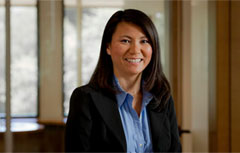
The new multi-university Engineering Research Center for Sensorimotor Neural Engineering (CSNE) will use smart chip and sensor technology to help people control prosthetic limbs and assistive devices and to revolutionize therapy for many debilitating conditions. Read more »
Engineering's Newest MacArthur Fellow: Shwetak Patel
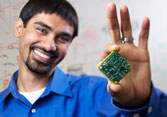
The UW assistant professor in Computer Science & Engineering and Electrical Engineering was selected for "envisioning cutting-edge new tools to address pressing social challenges and... devising elegant, simple solutions that dramatically reduce the cost of implementation." Read more »
Fall Engineering Lecture Series
Re-Engineering Aerospace: Flying Cleaner, Greener, Smarter
Join us for three fascinating and timely lectures that explore the innovations transforming the aerospace industry. Cleaner airplanes and ground operations will decrease environmental impact and boost efficiency and sustainability for commercial aviation and the military.
All lectures are free and are held on Wednesdays in Kane Hall 130 at 7:00 p.m. Registration is required.
Shrinking the Aerospace Carbon Footprint October 26

Mary Armstrong, Vice President - Environment, Health and Safety, The Boeing Company
Chemical engineering alumna Mary Armstrong reveals how engineering innovations are shrinking Boeing's domestic carbon footprint by 25% and leading worldwide industry efforts to enable zero carbon growth for air travel.
Repowering the Military with Alternative Energy November 9
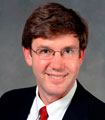
Tim Vinopal, Director - Environment, Health and Safety Engineering, Boeing Defense, Space and Security
Alumnus Tim Vinopal explains how Boeing is developing hydrogen-and solar-powered unmanned aircraft, producing the world's most-efficient solar cells, testing sustainable fuels for tactical aircraft, and designing smart-grid electrical systems for government facilities.
Flying Smart with Autonomous Vehicles November 16
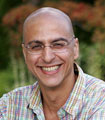
Mehran Mesbahi, A&A professor and Principal Investigator, Distributed Space Systems Lab
Imagine autonomous drones performing complex group maneuvers with no human intervention, or satellites orbiting around the sun, jointly searching for exoplanets. Mehran Mesbahi offers insights from engineering and biology to reveal how networked "smart" vehicles will take on challenging aerospace missions.